On December 11, 2025, I stood behind a folding table in Park City with a stack of flyers, a Grow the Flow sign, and the quiet hope that at least a few people would want to talk about water.
Reader, they very much did.
This was my first time volunteering with Grow the Flow, and it happened to coincide with a forum focused on the future of powder skiing and how the declining Great Salt Lake threatens not just our recreation, but our health. As a water quality scientist, this is the exact intersection where my brain lights up: hydrology, public health, climate feedbacks, and real people asking real questions.
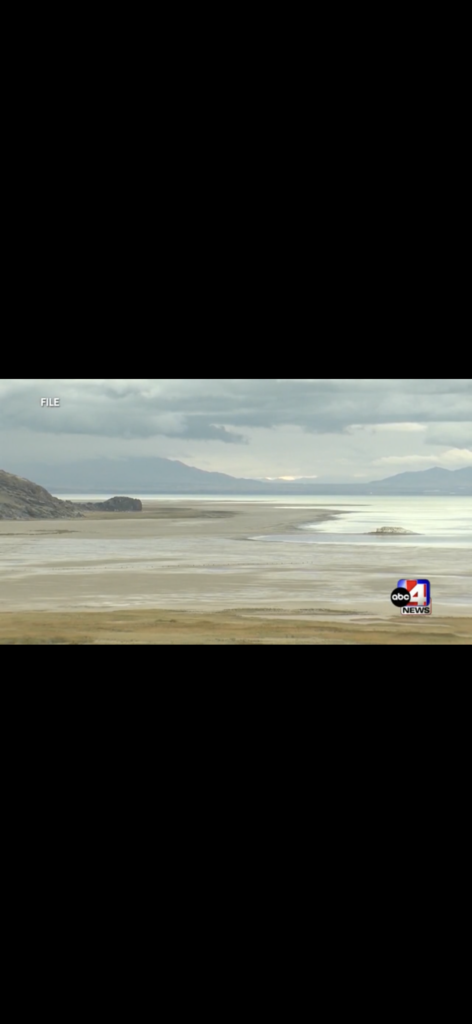
Also: ABC4 Utah News showed up, which meant all of this went from “casual science tabling” to “please explain complex lake-atmosphere dynamics without panicking.”
Why the Great Salt Lake Matters (Yes, Even for Skiers)
The forum brought together experts to talk about something many Utahns are just starting to connect the dots on: the Great Salt Lake plays a major role in our snowpack, air quality, and health.
Dr. Ben Abbott, an ecologist and BYU professor, explained it plainly and honestly, kind of alarmingly:
- The lake is about half gone, with roughly two-thirds of its water lost
- About 10% of regional snow comes from Great Salt Lake evaporation
- Nearly 50% of the rain and snow that falls in the valley is tied to the lake
- As the lake shrinks, dust settles on snow, causing it to melt faster
- Less snow + darker snow = shorter ski seasons
As someone who studies water quality, I can confirm: this checks out scientifically and emotionally (especially if you love winter).
But skiing is just one piece. When lakebed dust becomes airborne, it doesn’t just affect snowpack, it affects lungs, hearts, and long-term health outcomes.
Other regions around the world that have lost major lakes have seen increases in:
- Neurodegenerative diseases
- Infant mortality
- Multiple types of cancer
That’s not hypothetical. That’s documented.
Tabling as a Scientist (a.k.a. Translating Without Equations)
At the Grow the Flow table, my job wasn’t to lecture, it was to translate & educate.
People asked:
- “Is it really that bad?”
- “Can’t we just wait for more snow years?”
- “What does water conservation actually do?”
And the answer, over and over, was this:
 The Great Salt Lake responds directly to human water use.
It’s shrinking not because it stopped raining, but because we divert the water that used to reach it. Conservation, policy changes, agricultural leasing reforms — these are not symbolic gestures. They are hydrologic inputs.
Also, people were genuinely relieved to hear a scientist say: Yes, this is serious and yes, it’s still fixable.
Accidentally Ending Up on the News
ABC4 Utah News covered the event, highlighting Grow the Flow’s forum and the growing urgency around the lake’s decline. Seeing this issue discussed publicly, not buried in a journal article or policy memo, was honestly one of the most hopeful parts of the day.
The article emphasized something important: Utah’s leaders have made commitments.
- A goal to restore the lake by 2034 (GSL 2034)
- Engagement from government, private sector, faith communities, and philanthropy
- Legislative efforts to reform water leasing and rights
- A critical upcoming 2026 legislative session
Saving the lake will cost billions, it’s currently estimated to likely be between $2 and $10 billion but the cost of not acting is far higher.
Why This Was a Big Deal for Me
This event is exactly why I started The Salty Scientist.
I want to show up where science meets community.
I want to help translate what’s happening to the Great Salt Lake without jargon, without doom spirals, and without pretending this is someone else’s problem.
Volunteering with Grow the Flow reminded me that:
- People care when they understand
- Science belongs in public spaces
- And yes, water quality scientists can be friendly, funny, and slightly salty
The lake connects to everything in Utah: our health, economy, recreation, and climate. Once you see that, you can’t unsee it.
And honestly? That’s a pretty good place to start.
— The Salty Scientist